WTA Certified  ·  Heritage Specialists  · Breathable system

Cut heating bills
without degrading your heritage property

Vapour-open mineral insulation for pre-1919 buildings. Your walls and floor can breathe while your home stays warm.

WHY INSULATION FAILS

Most insulation was not designed for heritage buildings.

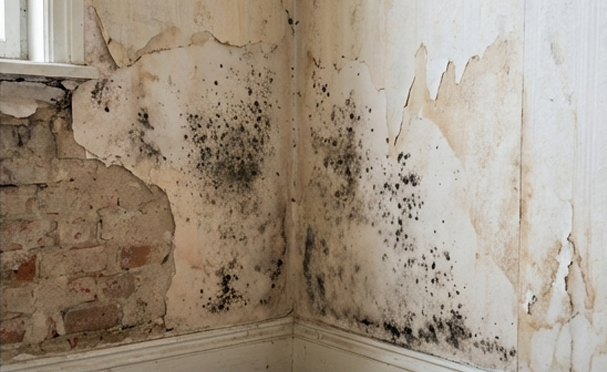
Pre-1919 buildings were designed to breathe. Lime mortar, solid brick and stone absorb and release moisture as part of a natural cycle. Seal that wall with modern insulation and you trap moisture inside the structure.

The consequences (interstitial condensation, accelerating fabric decay, mould) are invisible until serious damage is done. The UK's 5.9 million pre-1919 buildings need a better answer.

See the BreatheTherm solution

Solid walls breathe: vapour barriers don't

PIR boards create cold bridges and vapour barriers that cause moisture to condense inside the wall, invisibly damaging the historic fabric.

The energy performance paradox

Wet walls conduct heat up to 3× faster than dry ones. Conventional insulation that causes dampness can actively worsen energy performance over time: the opposite of its intended purpose.

Loss of Heritage Character

Bulky insulation systems alter window reveals and room proportions: the very features that define a Georgian or Victorian building. BreatheTherm achieves excellence in as little as 25mm.

OUR APPROACH

Insulation that works with your walls, not against them.

BreatheTherm breathable insulation is specifically formulated for pre‑1919 and listed buildings. Our systems use natural vapour‑permeable materials (including perlite and aerogel) that maintain the balance your walls depend on.

How breathable insulation works

Moisture is always present (rain, ground moisture, occupancy). The aim is not to "block" it, but to manage its movement safely
  1. ✅ Moisture moves freely

    Vapour‑permeable materials allow moisture to pass through rather than accumulate at the insulation boundary.

  2. ✅ Walls self‑regulate

    Our hygroscopic products absorb peak moisture and release it gradually. This helps smooth out humidity spikes inside the building and within the wall.

  3. ✅ Building fabric lasts longer

    No interstitial condensation means no timber decay, masonry spalling, failed renders or mould growth.

  4. ✅ Thermal performance improves

    Dry walls insulate better. As moisture balances, heat loss reduces and efficiency genuinely improves.

    Our breathable systems help walls operate closer to their intended thermal performance
  • ENERGY EFFICIENCY Reduce heating demand, cut emissions and improve energy ratings.
  • BREATHABILITY Prevent moisture build-up and condensation by enabling vapour to migrate through the building fabric.
  • HERITAGE FRIENDLY Maintain the appearance and integrity of historic homes.
  • SUSTAINABILITY Support net zero goals by improving existing homes and avoiding demolition.
  • COMPATIBILITY System components work with both breathable and non-breathable materials for mixed/phased retrofits.
  • COMFORT & WELL-BEING Promote better air quality, more stable temperatures and a healthier home environment.
INTERACTIVE LAYER GUIDE

Explore every layer

Hover or tap any marker on the diagram to discover the material properties, thermal performance data, and guide pricing for each BreatheTherm component.

Or select a layer directly from the legend below.

Walls (select one to learn more)

PerliScratch
PerliTherm
AeroBond
AeroGel
PerliFinish

Floor (select one to learn more)

PerliMat
Perlibase
Perlistruct
AeroBond
AeroGel
PerliScreed
INSIDE 18–21°C PerliScratch PerliTherm AeroBond AeroGel PerliFinish PerliMat Perlibase Perlistruct AeroBond AeroGel PerliScreed
Select a layer
Click or hover any hotspot on the diagram to explore that layer's thermal properties, vapour data, and guide pricing.
Thickness
λ Lambda
Sd Value
Guide price · ex. VAT · supply only

RETROFIT WITHOUT REGRET

Invest in BreatheTherm.
Enjoy the savings for years

The cheapest insulation is not always the lowest cost option. In traditional buildings, moisture risk, failed detailing and fabric damage can turn a quick fix into an expensive problem.

Conventional Insulation BreatheTherm System
Upfront cost Lower Moderate–higher
Moisture safety Higher risk in solid wall building Designed to manage moisture safely
Breathability Typically sealed systems Fully vapour-open
Listed building suitability Often difficult to obtain consent Typically more acceptable
Build-up thickness Often requires thick layers Slim, space-saving build-up
Long-term performance Can degrade if damp develops Stable, moisture resilient
Remedial risk Risk of corrective works if issues arise Significantly reduced risk
Property value impact Risk of issues arising at survey Long-term quality increases valuation
Installer complexity Multiple systems and detailing required Simple, integrated system

BreatheTherm is designed to

Keep heat in

Let moisture out

Protect the building for the long term

ABOUT YOU

Tailored support
for every enquiry

Select your profile to access the right starting point. Each path is different but every outcome is the same: a better, healthier, more efficient building.

Owners

Future-proof your heritage building. Reduce energy bills and eliminate damp without compromising the character or fabric of the construction.

  • Free property assessment included
  • Energy savings up to 65%
  • Healthier, mould-free living
  • Grant funding guidance
  • UK-wide approved installer network

Architects & Conservation Officers

Specification-ready systems for the most sensitive buildings. Full technical support from design stage to site sign-off and LPA approval.

  • WTA-compliant breathable system
  • Hygrothermal modelling service
  • BIM objects & full CAD detail library
  • Conservation area approval record
  • RIBA-accredited CPD available

Installers & Contractors

Join the approved installer network and tap into the UK's 5.9 million pre-1919 buildings waiting to be retrofitted properly. First in your area.

  • Full 2-day system installation training
  • Dedicated technical support line
  • Trade pricing from day one
  • Lead generation & project referrals
  • Marketing & specification support
PROOF OF PERFORMANCE

Past projects

Every project is different. Every outcome is the same: a warmer, drier, healthier building that retains its heritage character for generations to come.
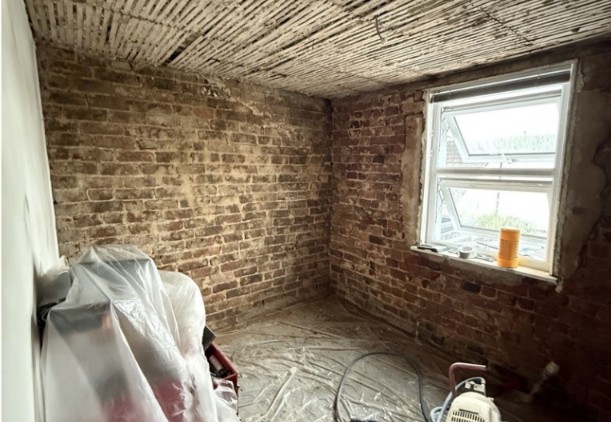
Historic Property  ·  Cheltenham

Bedroom Renovation, Upper Park Street

Breathable internal thermal upgrade to bare brick walls and a retained lath ceiling using PerliScratch, AeroBond, mesh, and PerliTherm improving surface warmth and reducing condensation risk while preserving historic fabric.

Walls: −46% Ceiling: −38% PerliTherm: 25mm
Victorian Terrace  ·  Bristol

Victorian Mansion Block, 12 Units

Internal wall insulation across 12 flats with hygrothermal monitoring installed throughout. Zero moisture failures recorded at 36-month post-completion review.
U-value: 0.19 Bills: −71% 36 months monitoring
Grade I Listed  ·  Gloucestershire

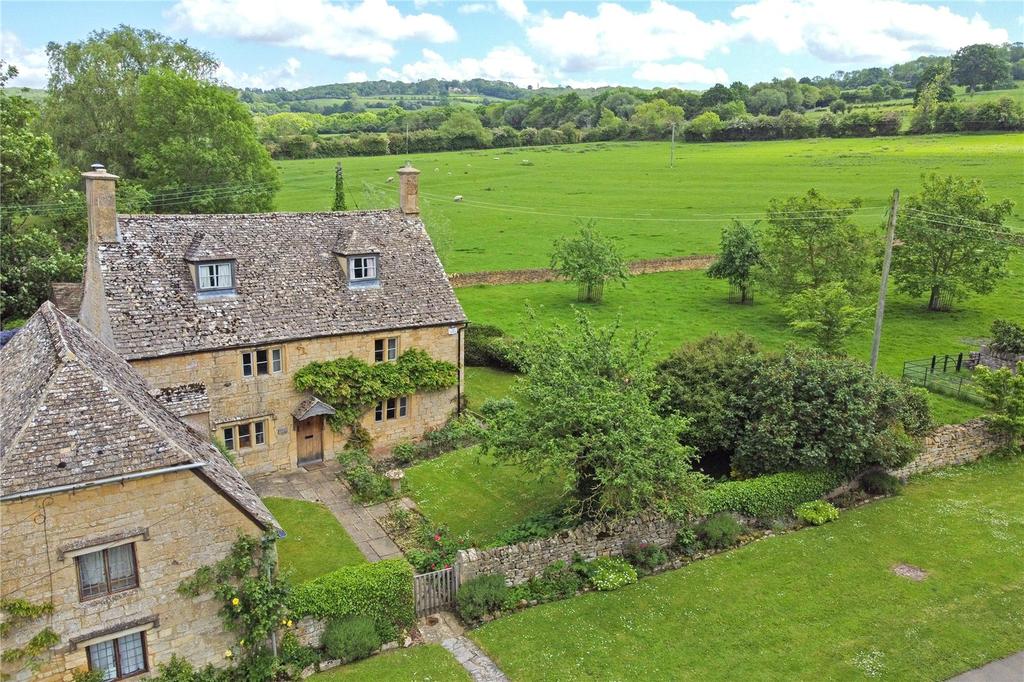
17th Century Cotswold Farmhouse

Solid stone walls, cob partitions and original lime plaster. Significant thermal improvement achieved while satisfying Historic England's strictest requirements.

U-value: 0.22 Bills: −52% Grade I compliant
In Their Words

What our clients say

The work was carried out quickly and with a minimum of disruption or mess... The wall now feels dry, and warmer to the touch than a similar, untreated stretch of wall. There are also no signs of discolouration or damp patches. We are considering having all our affected walls treated by BreatheTherm.

N
Nick Cirencester

Struggling for many years with a continually damp wall in barn conversion with no damp course... BreatheTherm ‘does what it says on the tin’. It allows the moisture in the wall to pass through and wick – result has been a dry wall throughout recent downpours.

C
Christopher Bristol

The whole BreatheTherm process has been far more straightforward and succesful than I could have imagined. I am absolutely thrilled with the result and would have no hesitation recommending BreatheTherm to anyone looking to improve the performance of a traditional property.

P
Patricia Fairford
MEET THE TEAM

Built on a combined 45 years of heritage experience

BreatheTherm was founded by two practitioners who, for decades, watched conventional insulation fail. But with that frustration they built something better.

Josh Tetley, Co-Founder of BreatheTherm
Founded HF Limited 2003

Josh Tetley

Co-Founder & Director

Josh founded HF Limited in 2003, building a reputation across the Cotswolds for high-quality construction and period property restoration. Two decades of hands-on work in traditional buildings revealed the same problem time and again: modern insulation was failing the structures it was meant to protect. That conviction drove the creation of BreatheTherm — a technically rigorous answer to a problem the industry had largely ignored.

20+ yrs heritage construction WTA Certified
Greg Podolak, Co-Founder of BreatheTherm
Joined HF Limited 2007

Greg Podolak

Co-Founder & Director

Greg joined Josh at HF Limited in 2007, becoming the technical backbone of the partnership. Together they launched HF Building in 2016, specialising in the conservation and retrofit of period properties. Greg's deep knowledge of heritage construction — and his frustration with products that damaged the buildings they were meant to improve — made BreatheTherm the next logical step.

Conservation retrofit specialist RIBA CPD

HF Limited (2003) → HF Building (2016) → BreatheTherm (2024)

Two builders who asked why insulation was making old buildings worse, and built the answer themselves

Common Questions

Questions?

Everything you need to know before your free assessment.

Still unsure? Call us on 01285 407088: we're always delighted to talk through the specifics of your project.

Book an assessment
What is BreatheTherm?
BreatheTherm is a breathable, fabric-first retrofit system developed specifically for solid-wall and heritage buildings. Rather than offering a single product, we look at how the building behaves as a whole (moisture, condensation, comfort and energy performance) and then design an appropriate wall, floor or junction build-up around that.
What problems does it address first?
Cold internal surfaces, condensation and comfort issues, while avoiding the moisture-trapping risks that can arise with more conventional retrofit approaches.
What is perlite?
Perlite is a natural volcanic mineral. When heated it expands and traps air, which makes our lime-based renders lightweight, insulating and vapour-open. Within the system it helps walls manage moisture safely by absorbing excess humidity and releasing it again as conditions dry.
What is aerogel made from?
Aerogel is a mineral material based on silica (the same basic constituent as sand and glass). During manufacture the liquid component is replaced with air, creating an extremely lightweight, non-combustible and highly insulating solid.
How do perlite and aerogel work together?
They are the component parts. Perlite forms the breathable, moisture-regulating backbone of the system. Aerogel is introduced selectively, typically in thin layers of around 5–30 mm, to enhance thermal performance where space, detailing or heritage constraints limit build-up thickness. They can be used together or independently, depending on the building and the priorities of the project.
Is this suitable for listed and heritage buildings?
Yes. All materials are mineral, vapour-open and designed to work with traditional construction. The approach supports drying and long-term fabric health, which generally aligns well with conservation principles.
Is BreatheTherm just insulation?
Not really. It’s a joined-up approach to the building fabric, considering floors, walls, junctions and finishes so that improvements work together safely rather than in isolation.
Why can't standard modern insulation be used in pre-1919 homes?
Pre-1919 buildings were built using breathable lime mortar and solid masonry designed to absorb and release moisture naturally. Modern PIR foam boards and mineral wool are vapour-resistant: when installed in old walls, they trap moisture inside the structure. This causes interstitial condensation, accelerated decay of historic fabric, and serious structural damp. BreatheTherm uses vapour-permeable mineral materials that work with the natural moisture cycle rather than against it.
What is vapour-permeable (breathable) insulation?
Vapour-permeable insulation allows moisture vapour to pass through the wall assembly, preventing it accumulating within the structure. Materials like expanded perlite and silica aerogel are hygroscopic: they can absorb small amounts of moisture and release it as conditions dry. This capillary activity keeps walls dry without impermeable barriers, making them ideal for solid masonry and timber-framed heritage buildings.
What U-value can I achieve with BreatheTherm?
Depending on the thickness available and existing wall construction, BreatheTherm systems can achieve U-values between 0.17 and 0.45 W/m²K. A typical 50mm PerliTherm build-up on a 215mm solid brick wall achieves approximately 0.35 W/m²K. Combining PerliTherm with our 10mm Aerogel Booster in constrained reveals can reach 0.17 W/m²K. A site-specific hygrothermal calculation is produced for every project.
Does installing internal wall insulation require planning permission?
Internal insulation does not typically require planning permission as it doesn't alter the building's external appearance. However, if your property is Listed, you will need Listed Building Consent before carrying out works that affect its character. BreatheTherm can provide supporting hygrothermal modelling reports and documentation to assist consent applications.
What is WTA certification and why does it matter?
The WTA (Wissenschaftlich-Technische Arbeitsgemeinschaft) is the German scientific association for building maintenance and monument preservation. WTA Merkblatt 6-4 defines the internationally recognised technical standard for internal insulation of historic buildings. A WTA-compliant system has been tested to manage moisture correctly in heritage wall constructions, giving architects, conservation officers and homeowners confidence that the insulation will protect, not harm, the historic fabric.
How long does BreatheTherm installation take?
For a typical Victorian or Georgian home, internal wall insulation takes 2–5 days per room, or 1–3 weeks for a whole house depending on scope and preparation required. The system uses dry-application materials (FYI lime plaster requires 3–7 days curing before decoration).
Can BreatheTherm be used on timber-framed or cob buildings?
Yes. The vapour-permeable nature of BreatheTherm materials makes them particularly suitable for timber-frame, wattle-and-daub, cob, and flint construction — all of which need to breathe freely. We adapt the specification for each substrate. Our technical team will advise on the most appropriate system for your specific construction type on the free assessment visit.
Get Started

Ready to protect your
building properly?

Speak to a heritage retrofit specialist. No obligation. Clear advice tailored to your building type, age, and any conservation requirements. We typically respond within one working day.

Free assessment
No hard sell
Conservation specialists

Owners

Future-proof your heritage home. Reduce energy bills and eliminate damp without compromising the character or fabric of your building.

Architects & Conservation Officers

Specification-ready systems for the most sensitive buildings. Full technical support from design stage to site sign-off and LPA approval.

Installers & Contractors

Join the approved installer network and tap into the UK's 5.9 million pre-1919 buildings waiting to be retrofitted properly. First in your area.

Thank you, we'll be in touch soon.

A member of the team will call within one working day to arrange your free property assessment.

In the meantime, call us directly on 01285 407088.
WTA Certified German heritage insulation standard
RIBA Approved CPD Accredited professional development
Green Register Member Sustainable building products
Historic England Guidance-compliant specification